
Agentic AI in the Wild: What Early Adopters Are Learning
From Theory to Enterprise Reality
Agentic AI isn’t just theory anymore. It’s being tested in live enterprise environments, and the results are telling.
Across industries, early adopters are learning what happens when AI agents stop analyzing and start acting. From automating workflows to orchestrating decisions, these deployments reveal what works, what breaks, and what needs to evolve.
The lesson so far is clear. Autonomy delivers power. Oversight defines success.

From Silos to Strategy
Most teams started small. They connected agents to single workflows like approvals, alerts, or predictive tasks to see if autonomy could improve speed and accuracy.
As pilots expanded, one pattern stood out. The biggest gains came when agents were connected across systems.
Agentic AI works best when it coordinates, not just executes. It connects data, tools, and teams so they work together in real time.
What Early Adopters Are Learning
Organizations testing agentic AI are uncovering four key lessons:
Integration Beats Intelligence: Smart agents fail if they can’t connect. Successful teams focus first on integrating agents with ERPs, CRMs, and analytics platforms. Connectivity turns autonomy into productivity.
Guardrails Matter: Agents perform best with clear boundaries. Enterprises are defining when agents act alone, when they escalate, and how actions are logged for auditability.
Feedback Builds Trust: Teams move faster when they understand agent decisions. Dashboards that show reasoning and outcomes help build confidence.
Simplicity Scales: Complex agent networks are hard to govern. Simplified orchestration and centralized monitoring keep adoption sustainable.
These lessons are helping teams build smarter strategies for AI adoption.
Workflow Automation in Action: Industry Scenarios
Agentic AI is showing up across industries, not just in software and IT.
Finance: Agents reconcile transactions, generate forecasts, and trigger fraud alerts inside ERP dashboards.
Public Sector: Workflow agents manage procurement cycles, route approvals, and maintain compliance logs automatically.
Manufacturing: Predictive maintenance agents monitor sensor data, schedule downtime, and alert supervisors in real time.
Healthcare: Administrative agents coordinate patient scheduling, billing workflows, and insurance verification without manual handoffs.
In every case, the formula is the same. Give agents context, structure, and oversight, and they deliver outcomes.
The Hidden Cost of Manual Oversight
Even with strong results, early adopters are facing common challenges:
Data Fragmentation: Agents need unified access to work across departments. Silos slow them down.
Human Trust: Teams hesitate when AI decisions are opaque. Transparency is essential.
Governance Complexity: More agents means more roles, hierarchies, and accountability frameworks.
Change Management: Success depends as much on people and process as it does on technology.
These challenges are shifting the focus. It’s no longer just about what AI can automate. It’s about how it integrates, communicates, and reports.
How DataPeak Makes It Work
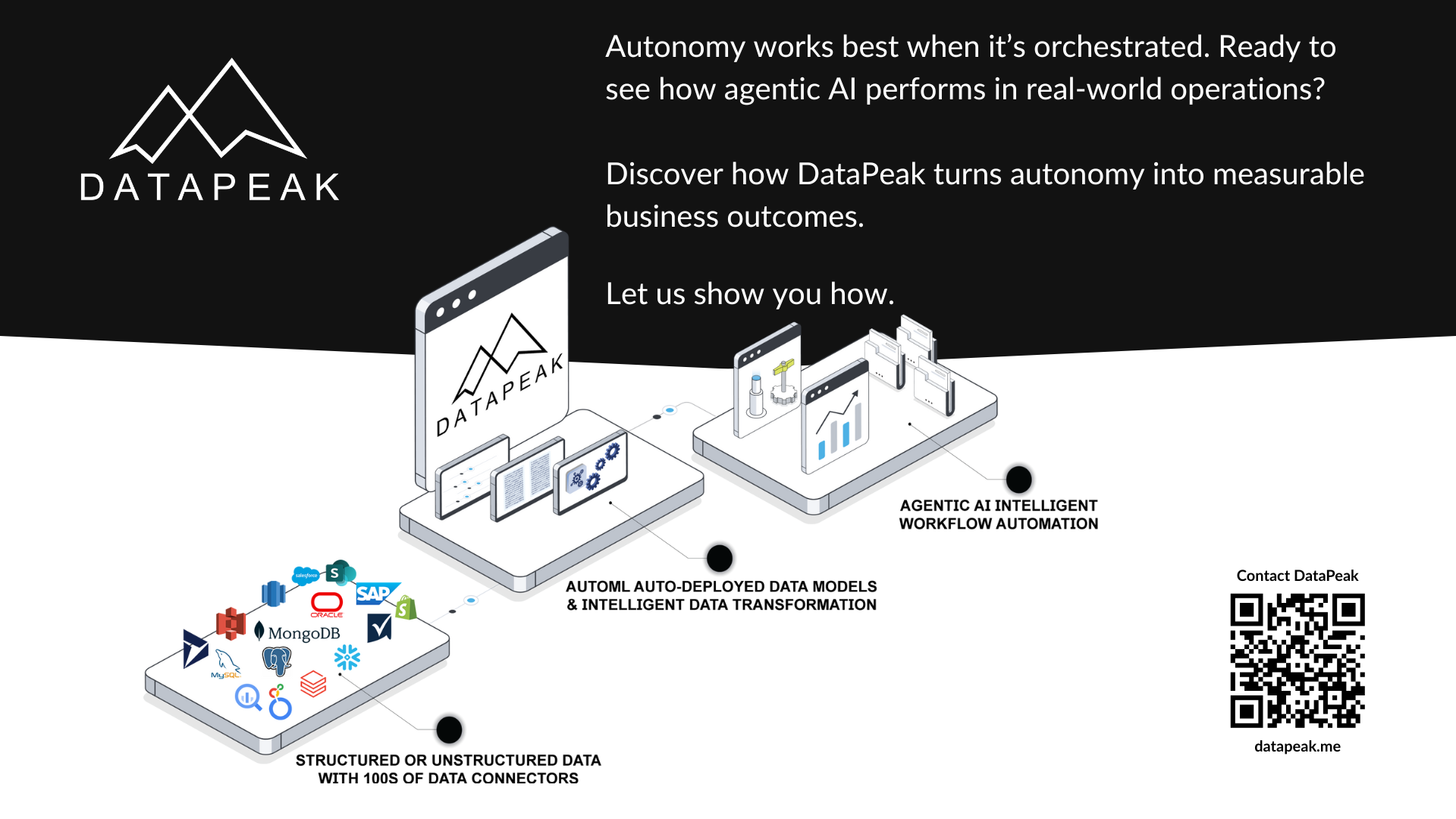
DataPeak was built around these real-world lessons. Its platform combines agentic AI, orchestration, and analytics to create systems that are autonomous and accountable.
Here’s how it works:
Unified Integration Layer: Connects agents directly to enterprise tools and removes silos.
Adaptive Orchestration: Coordinates multiple agents within a single governance framework.
Oversight Controls: Role-based permissions and audit trails maintain transparency.
Learning Feedback Loops: Agents learn from what works and improve over time.
With DataPeak, agents don’t just act. They collaborate, understand goals, measure outcomes, and adapt without losing human direction.
Autonomy Is Just the Starting Line
Agentic AI changes how enterprises operate. But it also changes how leaders think.
Autonomy isn’t just about speed. It’s about aligning systems with strategy. With the right guardrails, organizations gain agility, resilience, and clarity.
The first wave of adoption proves two things. Autonomy scales best when connected and governance is not optional.
The next frontier isn’t just deploying agents. It’s orchestrating them.
Keyword Profile: Agentic AI Use Cases, Enterprise AI Adoption, DataPeak AI Agents, Workflow Automation