
What Happens After No-Code? The Move Toward Co-Code Systems
Workflows Built Fast Need To Adapt Faster
No-code changed how teams build. Co-code changes how those systems grow.
For years, no-code has empowered business users to design and automate workflows with speed and clarity. It’s become the foundation for modern operations, and it’s not going anywhere.
But as workflows get more complex and conditions shift faster, teams need systems that don’t just execute. They need systems that adapt.
That’s where co-code comes in.
What Is Co-Code?
Co-code systems combine human input with AI adaptability.
Humans define the goals, rules, and context
AI agents handle execution, exceptions, and optimization
The system evolves without needing to be rebuilt from scratch
Co-code doesn’t replace no-code. It builds on it. It adds intelligence, flexibility, and responsiveness to workflows that already work.
Why Co-Code Complements No-Code
No-code platforms give teams speed, ownership, and visibility. But most workflows are built with static logic. They follow the same path every time.
That works well for repeatable tasks. But when conditions change or exceptions arise, static flows can stall.
Co-code solves this by introducing intelligent agents that learn, adapt, and make decisions based on context.
Real Examples of Co-Code in Action
A finance team builds an approval flow in no-code. The AI agent reroutes exceptions, flags anomalies, and learns from past decisions.
A marketing team sets campaign triggers. The agent adjusts timing and channel mix based on engagement patterns.
An operations team monitors SLAs. The agent escalates issues, predicts delays, and suggests process changes.
These workflows start with no-code. Co-code makes them dynamic.
How DataPeak Powers Co-Code Workflows
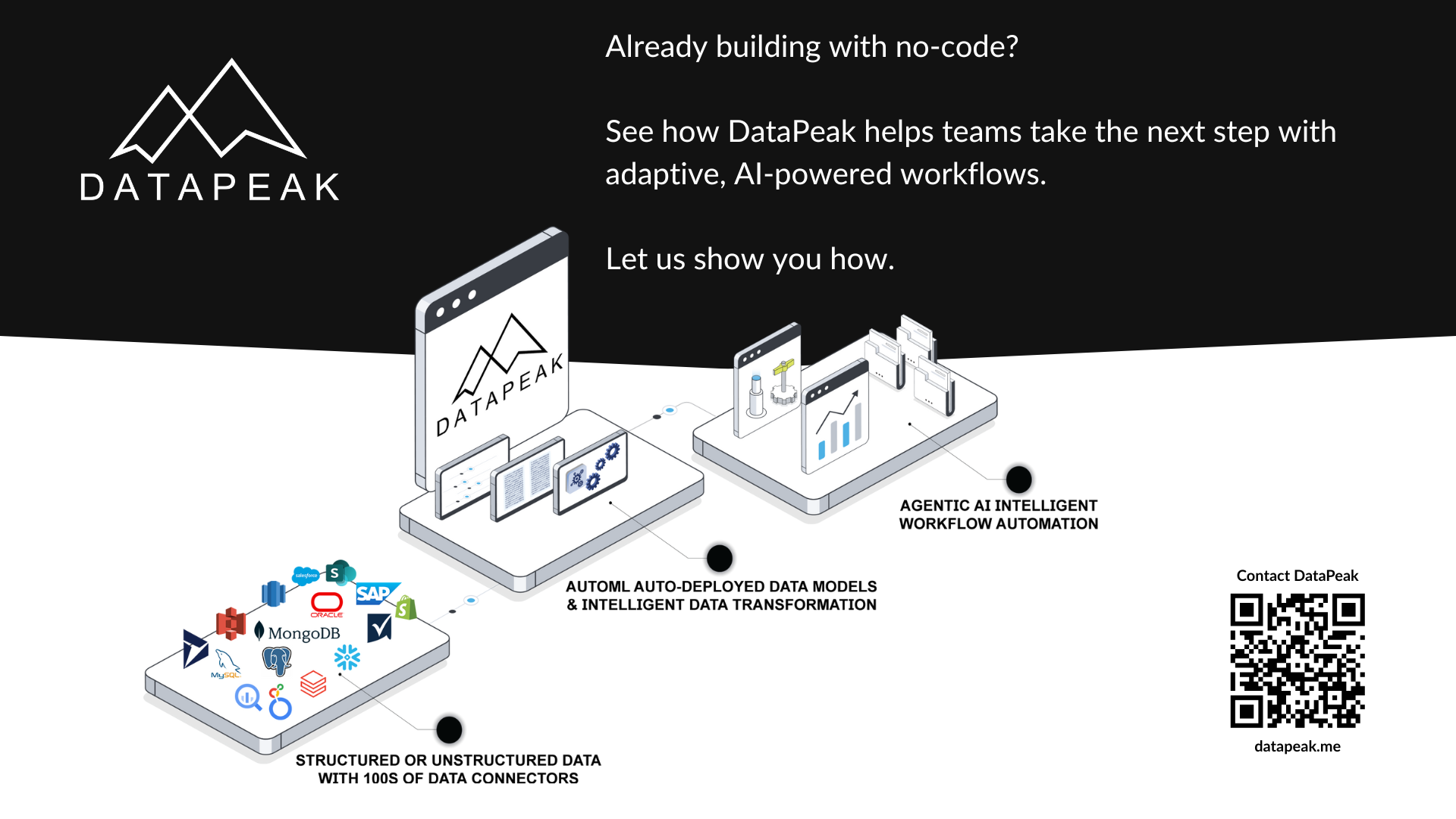
DataPeak is built to support both no-code and co-code orchestration. It starts with a visual workflow builder that lets teams design logic without writing code. From there, intelligent agents step in to manage complexity, exceptions, and optimization across systems.
Here’s how it works:
Agentic AI: Agents operate with context, not just rules. They make decisions, reroute flows, and surface insights based on real-time data.
Visual workflow builder: Drag-and-drop logic that’s transparent, editable, and accessible to non-technical users.
Context-aware orchestration: Agents respond to exceptions, adapt to changing conditions, and align actions with business goals.
Low-code extensions: Developers can plug in custom logic when needed, without disrupting the flow.
Enterprise governance: Role-based permissions, audit trails, and fallback paths ensure oversight and control at scale.
Cross-system integration: Workflows span CRMs, ERPs, spreadsheets, APIs, and more, with agents managing the handoffs.
With DataPeak, co-code is already shaping how teams build smarter, more adaptive workflows.
Why Co-Code Is the Next Step
The future of automation isn’t static. It’s responsive, intelligent, and built to evolve.
Co-code workflows don’t just execute. They learn. They respond to change, improve outcomes, and reduce the need for manual intervention.
For teams already building in no-code, co-code is the natural next step. It’s how good workflows become great systems.

Keyword Profile: Co-Code Systems, Hybrid AI Workflows, DataPeak AI Integration, Low-Code Future