
Predictive vs Prescriptive Analytics: What Every Enterprise Needs to Know
The Gap Between Knowing and Doing
Most organizations already use some form of predictive analytics. Sales teams forecast revenue. Manufacturers predict equipment breakdowns. Retailers project seasonal demand.
But here’s the problem: too many companies stop there. Predictions pile up in reports and dashboards, but nothing changes. That’s where prescriptive analytics comes in and where DataPeak’s agentic AI makes the leap from knowing to doing.
Predictive Analytics: The Forecasting Tool
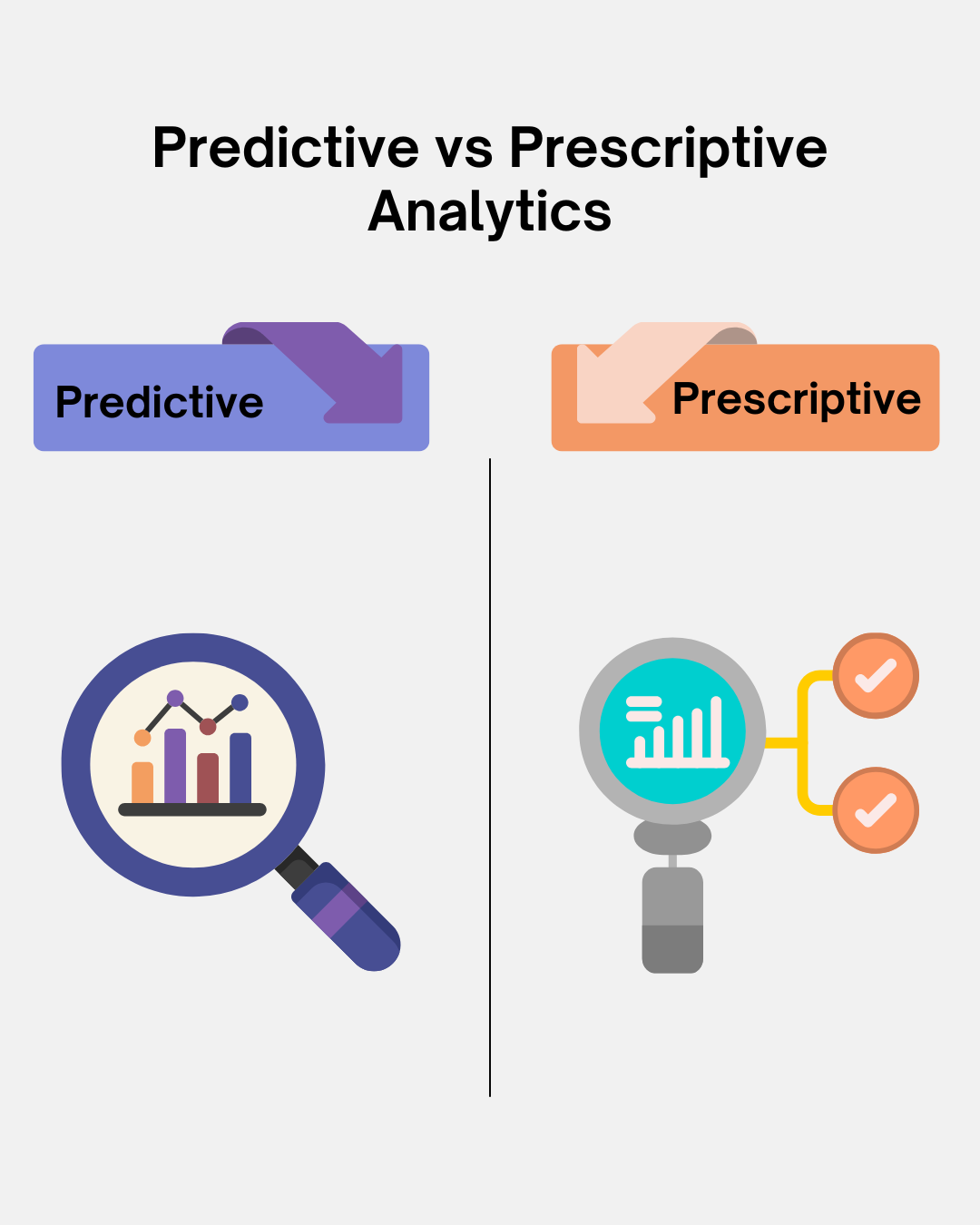
Predictive analytics is about using historical and real-time data to make informed guesses about what’s likely to happen.
Retail → Forecast demand for products before peak season.
Manufacturing → Predict equipment failure to plan maintenance.
Finance → Flag transactions likely to be fraudulent.
It’s powerful, but it often leaves the most important question unanswered: “What do we do about it?”
Prescriptive Analytics: The Action Layer
Prescriptive analytics builds on predictions by providing clear, data-backed recommendations or triggering actions automatically.
Retail → Don’t just predict demand, automatically adjust inventory orders.
Manufacturing → Don’t just forecast downtime, schedule maintenance and reroute production.
Finance → Don’t just flag fraud, freeze the transaction and alert the compliance team.
This is the difference between analytics as a rear-view mirror and analytics as a navigation system.
Why Most Enterprises Fall Short
Even with access to predictive models, many organizations fail to operationalize them. Common roadblocks include:
Siloed systems that prevent data from triggering workflows.
Overreliance on analysts to interpret results.
Manual decision points that create bottlenecks.
Prescriptive analytics only works when connected to execution. That’s where DataPeak comes in.
DataPeak’s Edge: Agentic AI That Closes the Loop
With DataPeak, predictive and prescriptive analytics aren’t separate stages. They’re part of a continuous cycle where agentic AI makes sure insights never sit idle.
Here’s how it works:
No-code queries make predictive analytics accessible to every team member, not just data scientists.
Agentic AI workflows turn recommendations into automated actions across finance, supply chain, HR, or public sector systems.
Dashboards with permission hierarchies ensure the right people stay informed and in control, while agents handle execution.
Result: analytics that’s faster, smarter, and always connected to real-world outcomes.
Example in Practice
Imagine a supply chain manager:
Predictive analytics shows a key supplier is likely to miss its delivery window.
Prescriptive analytics doesn’t stop there. It automatically suggests re-routing to backup suppliers, generates cost impact models, and notifies procurement.
With DataPeak, these recommendations can be automated as agent workflows, so the manager isn’t just reacting, but staying two steps ahead.
Why It Matters Now
Markets are moving too quickly for static dashboards. Predictions without action lead to missed opportunities and costly delays. By uniting predictive and prescriptive analytics with agentic AI, enterprises can:
Respond to risk in real time.
Capture opportunities before competitors do.
Scale decision-making without scaling headcount.
Beyond Prediction
Predictive analytics answers “what’s likely to happen?” Prescriptive analytics answers “what should we do?” DataPeak ensures the answers aren’t just written in a report, they’re acted upon in real workflows.
The future of analytics isn’t just forecasting. It’s decision-making at the speed of data.

Keyword Profile: DataPeak analytics, predictive vs prescriptive analytics, prescriptive analytics examples, predictive analytics in business, AI-powered analytics, agentic AI workflows, no-code analytics